What UK and US families need to understand about legality, curriculum, and what replaces school
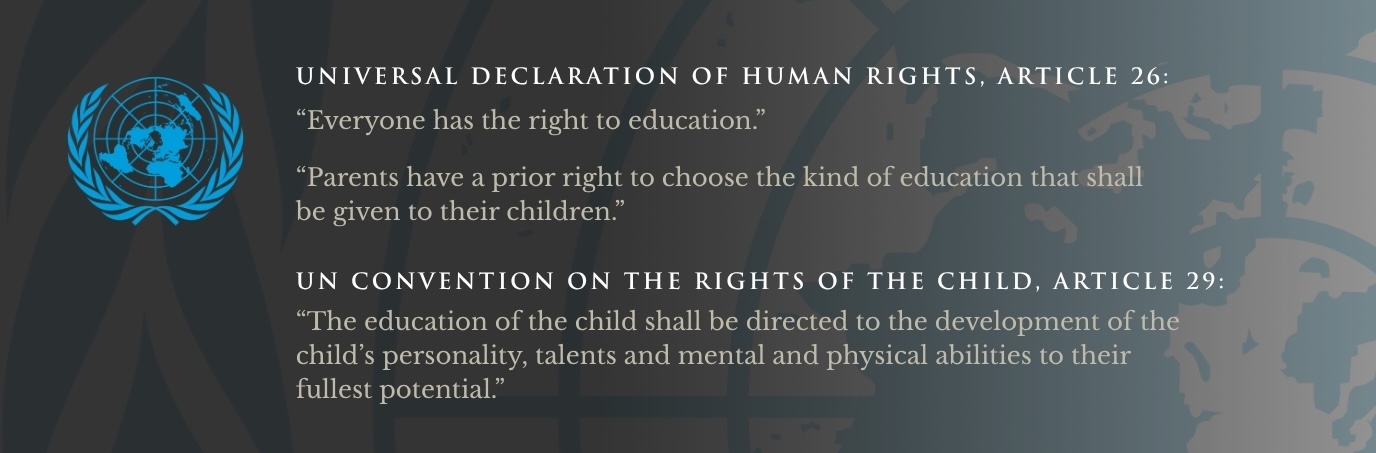
Parents in both the UK and the United States are not legally required to keep their children in school, but they are required to ensure that their children receive a suitable education. The United Nations sets this out clearly: every child has a right to an education, and parents have the right to choose how that education is provided.
Families reach this point for very different reasons. They might be relocating, traveling for an extended period of time, or the student might not be coping in that environment, or they might be a professional performer or athlete whose commitments no longer fit a conventional timetable.
Within the UK, education law is devolved, and the specific rules differ between England, Scotland, Wales, and Northern Ireland. The underlying principle is consistent: parents are responsible for their child’s education. However, the process and level of oversight vary.
For clarity, most of the detail that follows focuses on England, where the legal framework is widely referenced and often assumed to apply more broadly.
In England, Section 7 of the Education Act 1996 places a duty on parents to provide an
“efficient full-time education suitable to [the child’s] age, ability and aptitude delivered either by regular attendance at school, or otherwise.”
That "or otherwise" is the legal basis for home education in England. If a child is already enrolled at a school, they can usually be removed from the roll by notifying the school in writing. This is known as deregistration.
Government guidance confirms that schools must accept this in most cases if the child is being withdrawn entirely, although there are exceptions. If a child attends a special school, or is subject to a school attendance order, permission from the local authority is required before removal. Parents are not required to follow the National Curriculum, but they must provide a full-time and suitable education. Local authorities may make enquiries if they have reason to believe this is not being met.
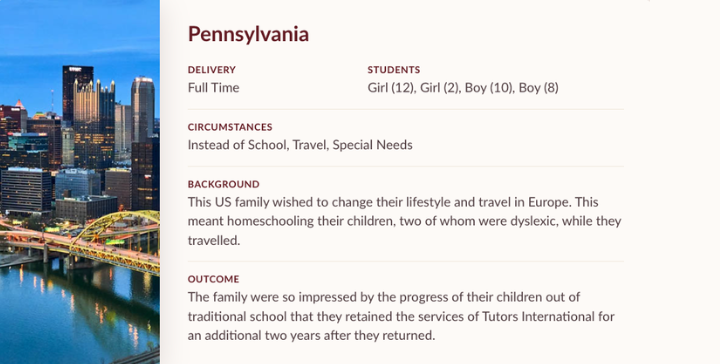
In the United States, the legal position is broadly comparable, but it’s a bit more fragmented. Education is governed at state level rather than federally, and while all states permit home education, the requirements vary significantly. Some states, such as Texas, impose relatively minimal obligations beyond a broadly defined curriculum. Others, including New York and Pennsylvania, require parents to submit detailed education plans, maintain attendance records, and provide periodic assessments or standardised testing.
There is no direct equivalent to “deregistration” as used in England. In most cases, parents formally withdraw their child from school and then comply with the homeschooling requirements of the state in which they live. But once a child is no longer enrolled in school, the parents are now responsible for providing an “equivalent” education. As in the UK, there is no single prescribed model for how that education must be delivered.
Curriculum decisions carry long-term consequences
One of the first decisions families face is whether to follow a recognised curriculum.
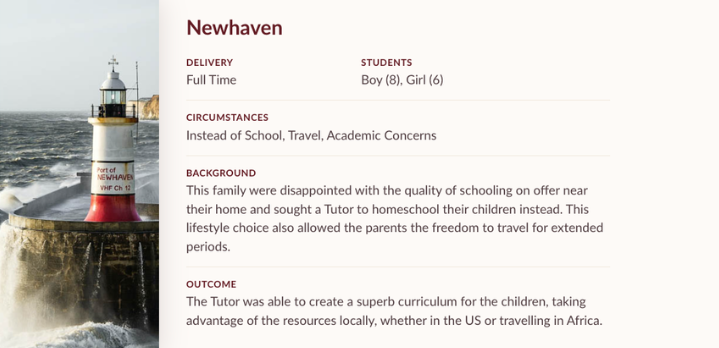
Some families are aiming for continuity. That might be keeping a child in step with their peers so that re-entry to school at some point will be more straightforward. For others, the decision is more long term, with parents choosing to build a different kind of education altogether, around travel, advanced study, special educational needs, or a child’s particular pace of learning.
Continuing with a structured pathway, such as GCSEs and A-levels in the UK, or a US high school programme with Advanced Placement, provides continuity. It ensures that the student is working towards qualifications that are widely understood by universities and employers. It also imposes a sequence, which helps prevent gaps in knowledge.
At the same time, not all families choose to follow a conventional academic pathway. There has been a visible rise in what is often described as “world schooling”, where children are withdrawn from school and learn through travel, exposure, and experience rather than a defined curriculum. Many families are drawn to the breadth this offers. The ability to follow a child’s interests, move at an appropriate pace, and engage more deeply with subjects in context is genuinely valuable.
There is far greater flexibility in choosing not to follow a formal curriculum, but it does introduce more complexity later. University admissions, particularly at selective institutions, are still heavily influenced by standardised measures of achievement. Without recognised qualifications, students may need to demonstrate their ability through alternative routes, which are often less straightforward.
There is also a practical consideration. A curriculum provides not just content, but order. Mathematics, for example, is cumulative; gaps in foundational understanding tend to compound over time. The same is true, in different ways, across the sciences and many areas of the humanities.
For families who successfully move away from a formal curriculum, they are not removing structure. It is redesigned and guided by the child’s interests and pace, but it still needs clear progression, subject expertise, and long-term academic direction.
Designing this kind of framework independently is possible, but it requires subject knowledge, planning, and ongoing oversight.
What educating outside school actually involves
Providing a full academic education outside school involves more than selecting textbooks or enrolling in an online programme.
A school provides a set of embedded functions: a structured curriculum, subject-specialist teaching, progression frameworks, external assessment points, and institutional accountability. These are the mechanisms most students rely on to maintain academic momentum over time.
Once a child leaves that system, those functions don’t disappear, they need to be replicated, adapted, or deliberately replaced. A relocating family will need close alignment with the future school. A family travelling for several months wants to preserve academic continuity without losing the value of the experience itself. A child preparing for GCSEs or A levels outside school will need something different again: subject depth, exam planning, and clear benchmarks.
Research backs this up. For example, a study in 2020 found that academic outcomes varied widely, depending on the level of structure, consistency, and educational expertise involved. Where an education is systematic and well supported, the outcomes can be strong. Where it is less structured, progression can be uneven. (We’ve seen this pattern across other alternative education models.)
For families used to high-performing independent schools, moving into homeschooling can be a bigger shift than expected. Schools do not simply deliver content; they manage sequencing, ensure coverage across subjects, and provide benchmarks against national or international standards.
There are practicalities that need to be carefully thought through:
- Time commitment: Delivering a full, multi-subject programme requires a daily commitment that most families can’t sustain.
- Subject expertise: While teaching in the early years tends to be broader, secondary-level mathematics, sciences, and advanced humanities usually require subject specialists.
- Assessment and benchmarking: You need formal testing points in order to measure the child’s progress objectively and identify any gaps as you go along.
- Continuity and structure: Without the consistency of a school timetable and framework, learning can easily become fragmented, with uneven progress across different subjects.
- The child’s experience: The factors that led to leaving school, whether academic, social, or emotional, do not disappear once a child steps away from it, and need to be actively understood and supported within the new structure.
Why many families bring in private homeschool tutors
For these reasons, families who choose to educate outside school often move towards a more structured model over time.
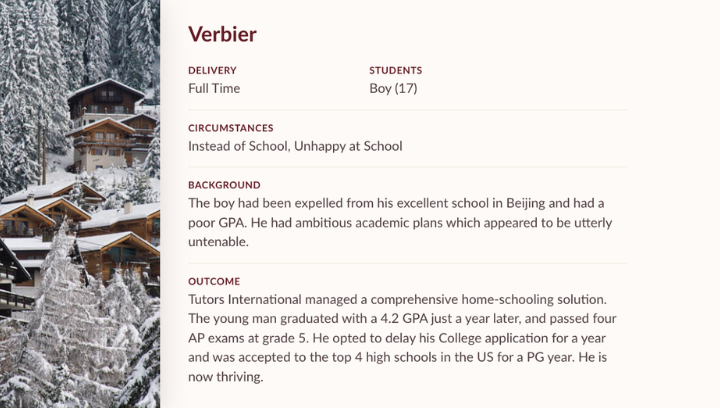
This usually involves bringing in an experienced full-time private tutor who oversees the child’s education across subjects, coordinates their external examinations, and keeps everything aligned with long-term academic goals.
Replicating the sheer breadth and depth of a school education requires significant expertise, but where those elements are in place, outcomes tend to be more consistent.
Private tutoring is widely regarded as the “gold standard” of education. Benjamin Bloom’s research found that students taught one-to-one, combined with mastery learning techniques, performed around two standard deviations higher (often referred to as the “2 sigma effect”) compared to traditional classroom learning. When teaching is tailored to the individual, both the pace and the depth of learning improve.
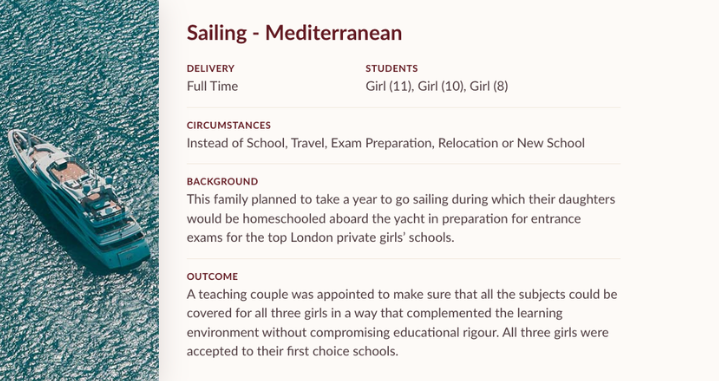
For families who are internationally mobile, or whose lifestyles do not align easily with a fixed school structure, this model also provides stability. The educational framework remains consistent, even as the family moves between locations.
The issue is not whether it is allowed, but what replaces it
The ability to remove a child from school is relatively straightforward in both the UK and the US. What follows is not.
Providing a suitable education involves decisions about curriculum, teaching, assessment, and long-term academic direction. It requires time, expertise, and a level of organisation that is often underestimated.
For some families, particularly where a child is not well served by the school environment, it becomes a necessary step. It is not a neutral one. It replaces an established system with one that has to be built, managed, and sustained.
The more relevant question is not whether it is allowed, but whether it can be done to a standard that justifies the decision, and that’s where a full-time, experienced homeschool tutor becomes indispensable.